Here’s what you’ll take away from this post: layout ideas that actually work in your space, tips for mixing prints without the chaos, and a free worksheet to make it easy.
A gallery wall is one of the most beautiful and personal ways to decorate your home. Unlike store-bought artwork that may fall in and out of favor with ever-changing trends, your gallery wall is a timeless thread connecting your family to the moments that made you who you are - never going out of style, no matter how much time passes. These images turn your space into more than just a place where you live - they create a home full of love and belonging. A home where you see your child holding onto their favorite lovey, your middle child lighting up around their older sibling, or the quiet loyalty of a dog growing older at your feet - every time you enter the room. A gallery wall is so much more than just decor. It's a way of honoring your family's story.
3 Principles
for a
Beautiful Gallery Wall
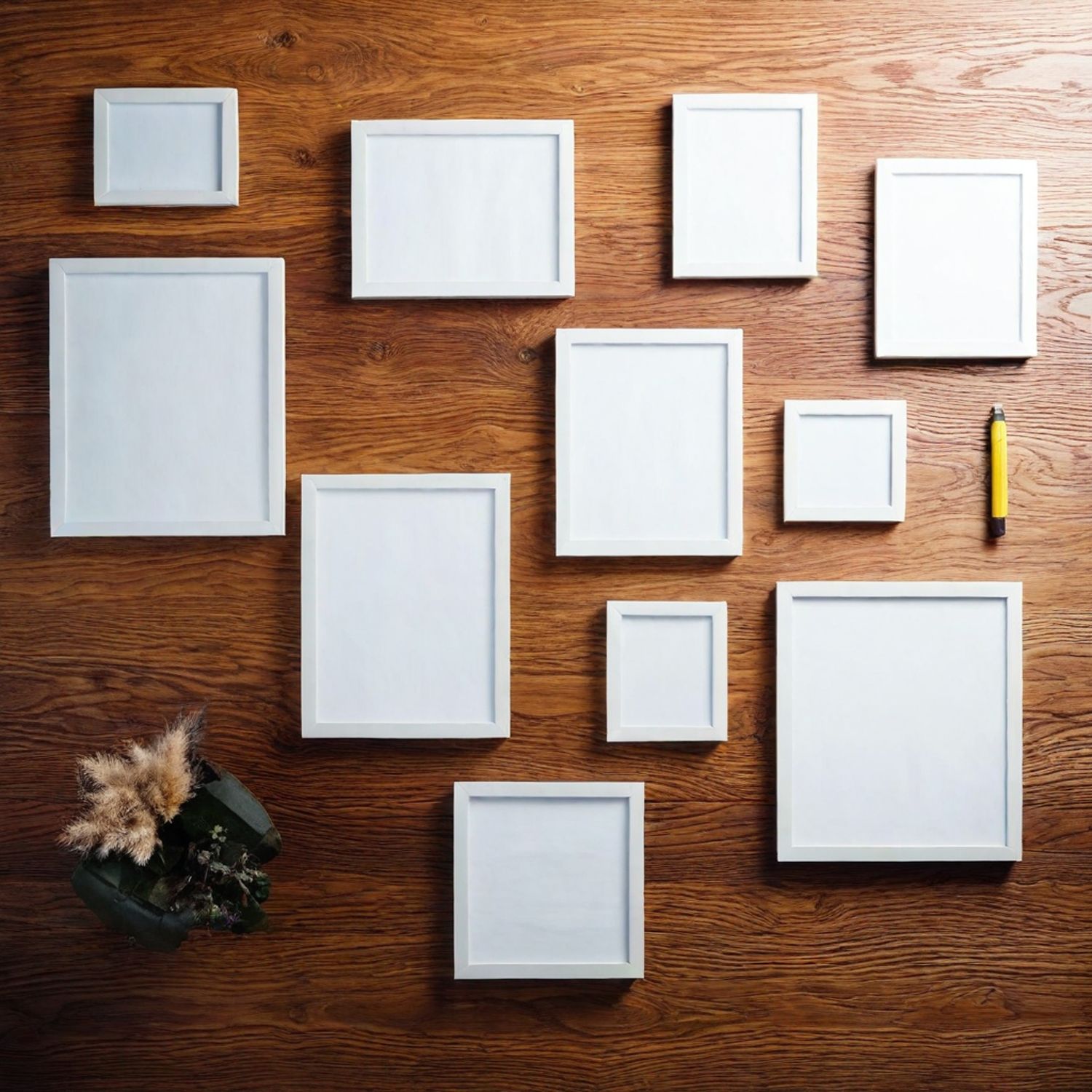
Arrange frames on the floor to easily make changes before hammering any nails into the wall!
I. Balance
Your wall doesn’t need to be perfectly symmetrical, but it should feel evenly weighted. Start with one larger piece as your anchor, then build around it. Think of it as visual storytelling - each piece has a place in the rhythm.
Pro tip: Lay it out on the floor first or mock it up with painter’s tape.
II. Cohesion
Choose a few repeating elements - like matching frames, a consistent color palette, or all candid moments - to make your gallery feel thoughtfully connected.
Pro tip: White mats, black frames, or all color images can unify the look without feeling rigid.
III. Proportion & Placement
Your layout should match the scale of your wall and any furniture below it. Aim for the full gallery to span 60–75% of the furniture width, and center it at 57–60" from the floor.
Pro tip: Leave 2–3" of space between pieces for a clean, airy feel.
Size Really Does Matter
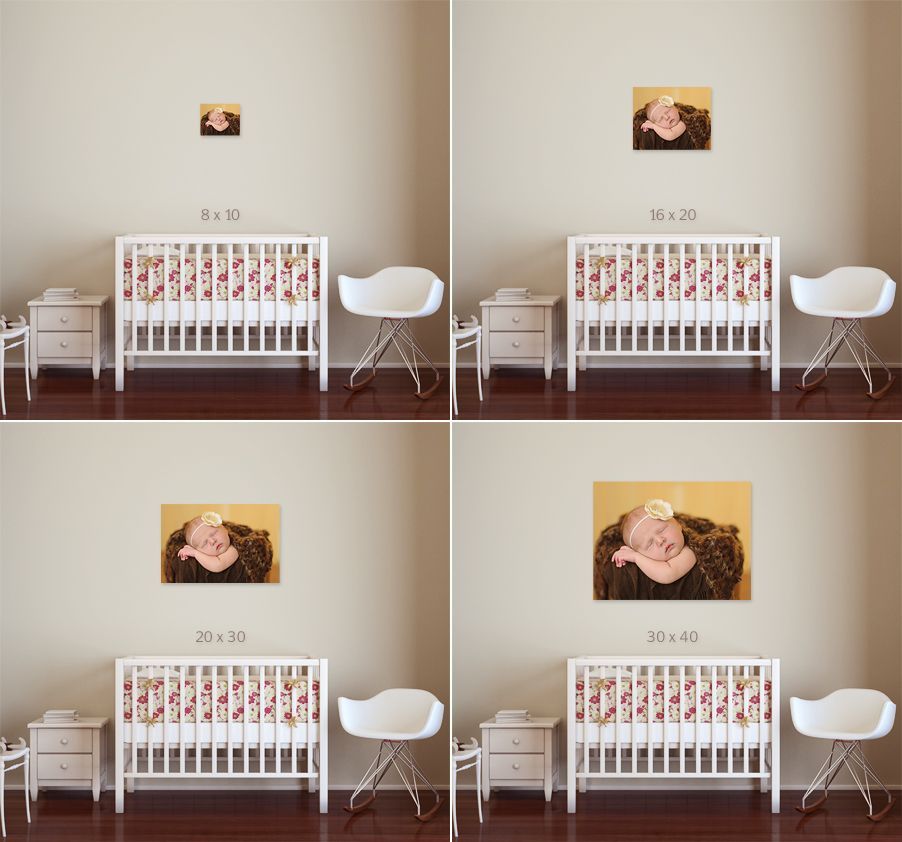
Great example of a size guide using the nursery room template from www.arianafalerni.com/design
When I was a kid, we rarely had prints larger than 8x10. It just wasn't the norm. But if you’ve ever tried hanging an 8x10 above a couch or in a wide hallway, you know it gets swallowed up by the empty space.
You can see from the nursery room image, just how important size is when hanging prints: the 8x10 is woefully undersized for the space yet the 30x40 is a beautiful statement piece.
Admittedly, size matters more when hanging a single image. But it's just as important when designing a gallery wall. A mix of sizes creates visual interest and a natural sense of movement. On the other hand, images of the same size place a grid layout create a calm and orderly feel. Both are beautiful. It just depends on the vibe you're going for.
Common Print Sizes for Gallery Walls:
Large focal pieces
20x30, 24x36, 30x40
Medium-sized accents
16x20, 11x14
Smaller supporting images
8x10, 8x12, or 5x7 (best matted or grouped)
Pro tip:
Gallery walls often look best you combine 1–2 large anchor pieces with 2–4 smaller supporting prints. Adding mats helps create visual breathing room and brings cohesion to a wall with varied photo sizes.
Where to Create a Gallery Wall
Over the Couch
Why Over the Couch Works
This is one of the most popular and versatile spots for a gallery wall because it naturally draws the eye and sets the tone for the whole living space. It acts as a built-in focal point, making it the perfect place to display a large statement piece or a thoughtful collection of family moments.
Most people gather in the living room, so placing personal images here makes your home feel warm, lived-in, and full of story. Whether it’s a single oversized print or a dynamic arrangement of portraits and candids, a gallery wall over the couch brings meaning to the space where your family relaxes, connects, and shares life together.
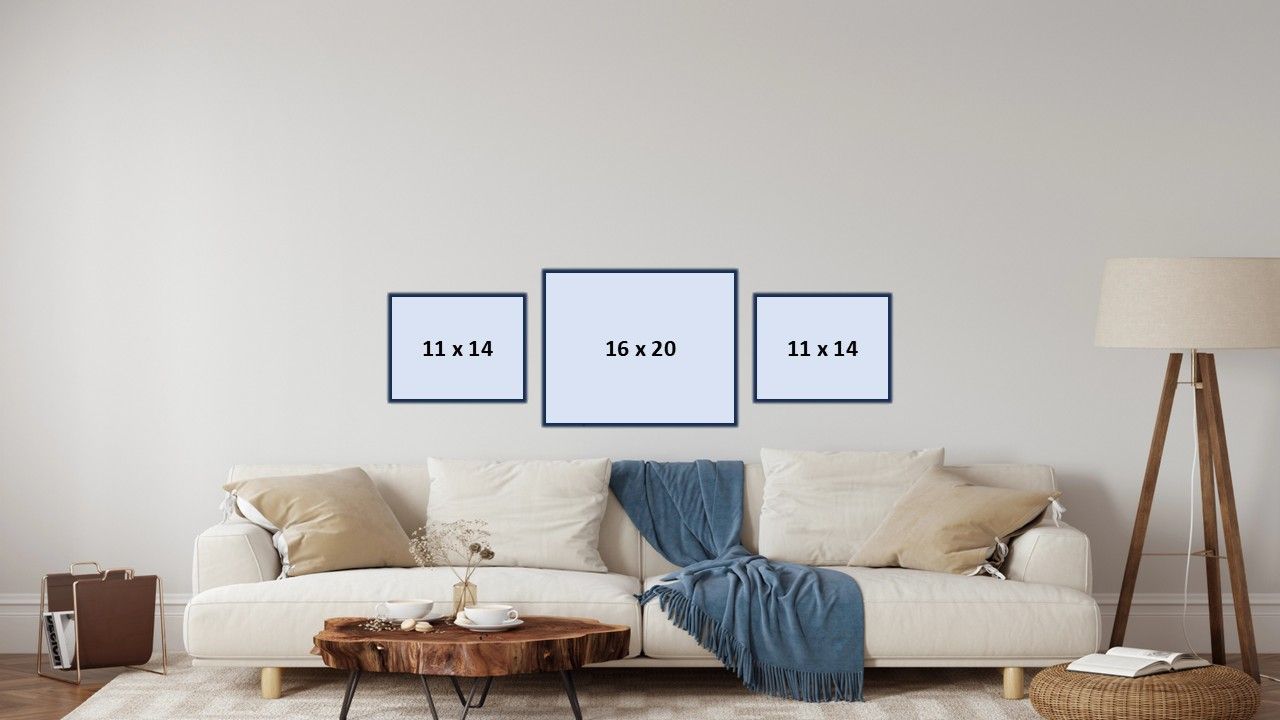
Top image: The largest print anchors the center, drawing the eye inward. A balanced and symmetrical feel.
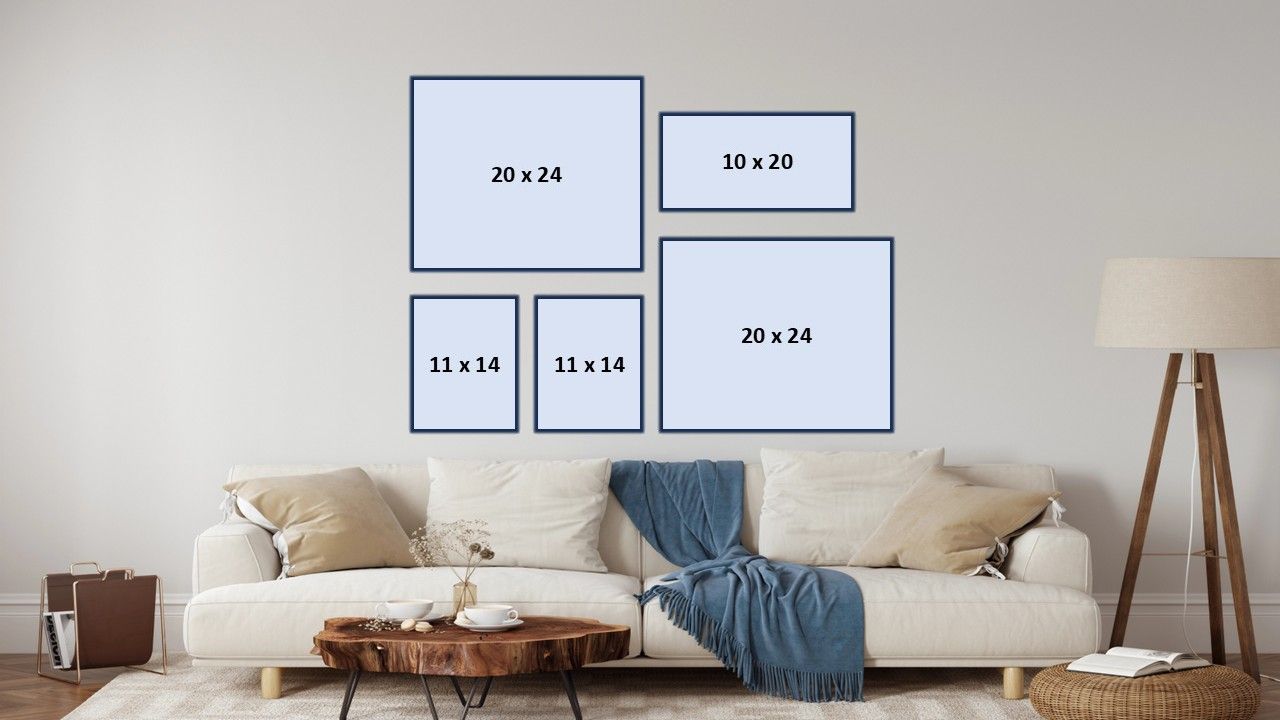
Bottom image: Large prints on the edges create movement and encourage the eye to travel around the gallery.
Size Suggestions
- 1 anchor piece: 24x36 or 30x40
- Paired frames: 16x20, 11x14
- Grid-style: 5–7 pieces in varying sizes Try a mix of 11x14, 10x10, and 8x10 for balance. Tip: Use matching mats to tie the look together.
Pro tips:
- The span of a gallery wall above your sofa should be no wider than 2/3s the length of the couch
- The lowest piece should be 5-8" above the sofa
- Start with your largest piece (your anchor) and build around it.
Product Picks:
- Matted framed prints offer a clean, timeless look - and they elevate even everyday moments.
- Canvas adds cozy warmth and beautiful texture, perfect for living spaces filled with love and laughter.
- Mix framed and canvas styles adds visual interest and tells a layered story - just like your family.
💡 Karen’s Tip:
- Lay everything out on the floor first - or let me mock it up digitally so you can see how it will look before you hang a single nail!
In the Hallway
Why the Hallway Works:
Hallways are often overlooked, but they’re one of the most charming spots for a gallery wall. Because we pass through them so often, they’re perfect for displaying a series of family photos that naturally tell a story. From newborn snuggles to silly sibling moments, hallway galleries let you relive the seasons of family life—every time you walk by.
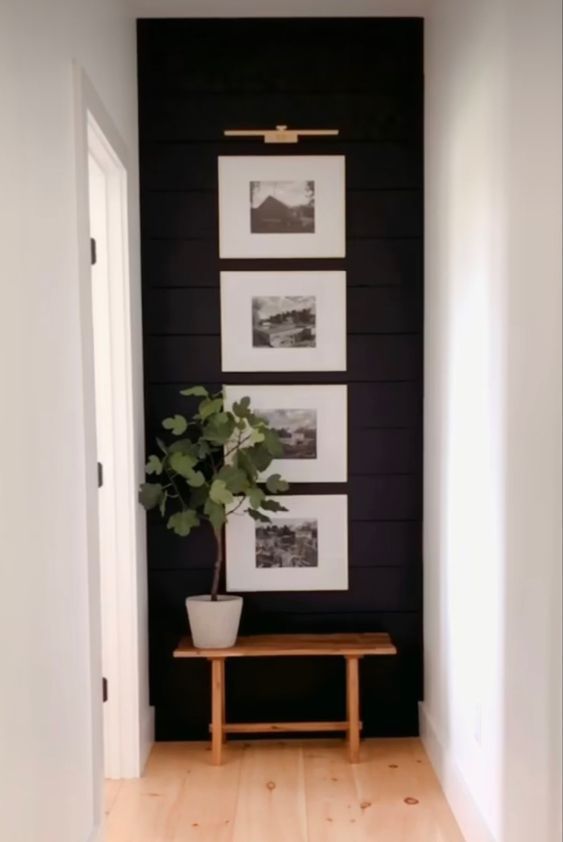
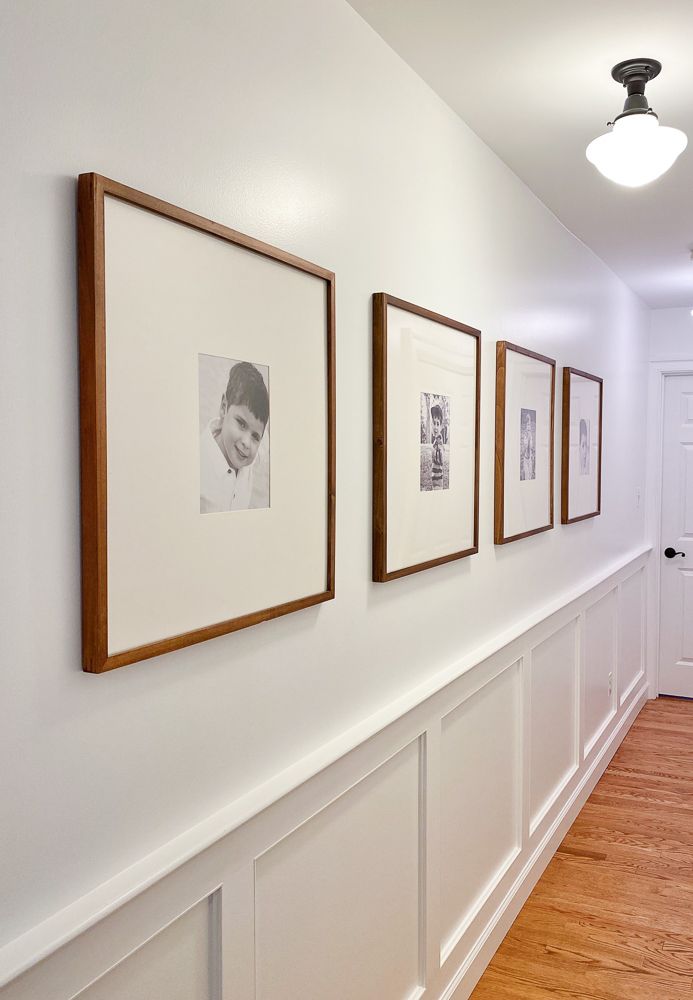
Vertical arrangement of framed prints makes the most of a narrow hallway and draws the eye upward—perfect for tight spaces. Photo Credit: ATLEE + CO
A linear arrangement with matching frames and white mats creates a clean, timeless look that flows naturally down the hall. Photo credit: @theverestplace
Size Suggestions
- Linear arrangement: 4–6 images in the 11x14 to 16x20 range
- Vertical layout (for narrow walls): 10x20 or 12x24
- Small accent images: 8x10, 8x12 (best with mats or groupings)
Pro Tips:
- Align the centers of each frame at approximately 57–60” from the floor
- Keep spacing consistent (2–3 inches) between each piece
- If the hallway is narrow, stick with thinner frames and avoid oversized pieces
Product Picks:
- Acrylic prints are great in narrow spaces—sleek and easy to clean
- Framed prints with white mats create cohesion across a long space
- Use matching frames for a clean, editorial look or vary frame tones slightly for a more relaxed feel
💡 Karen’s Tip: Use movement to tell a story.
- Hallways are all about flow, so use the natural movement through the space to tell a visual story. Start with the earliest memory at one end, and let the images unfold as you walk by -like pages in a family album.
Entryway
Why the Entryway Works:
Your entryway sets the tone for your entire home. It’s the first impression guests receive and often the last space you see before heading out the door. A gallery wall here adds personality, warmth, and a beautiful sense of welcome. It’s a wonderful space to feature joyful, connection-filled moments - images that remind you of what really matters each time you come and go.
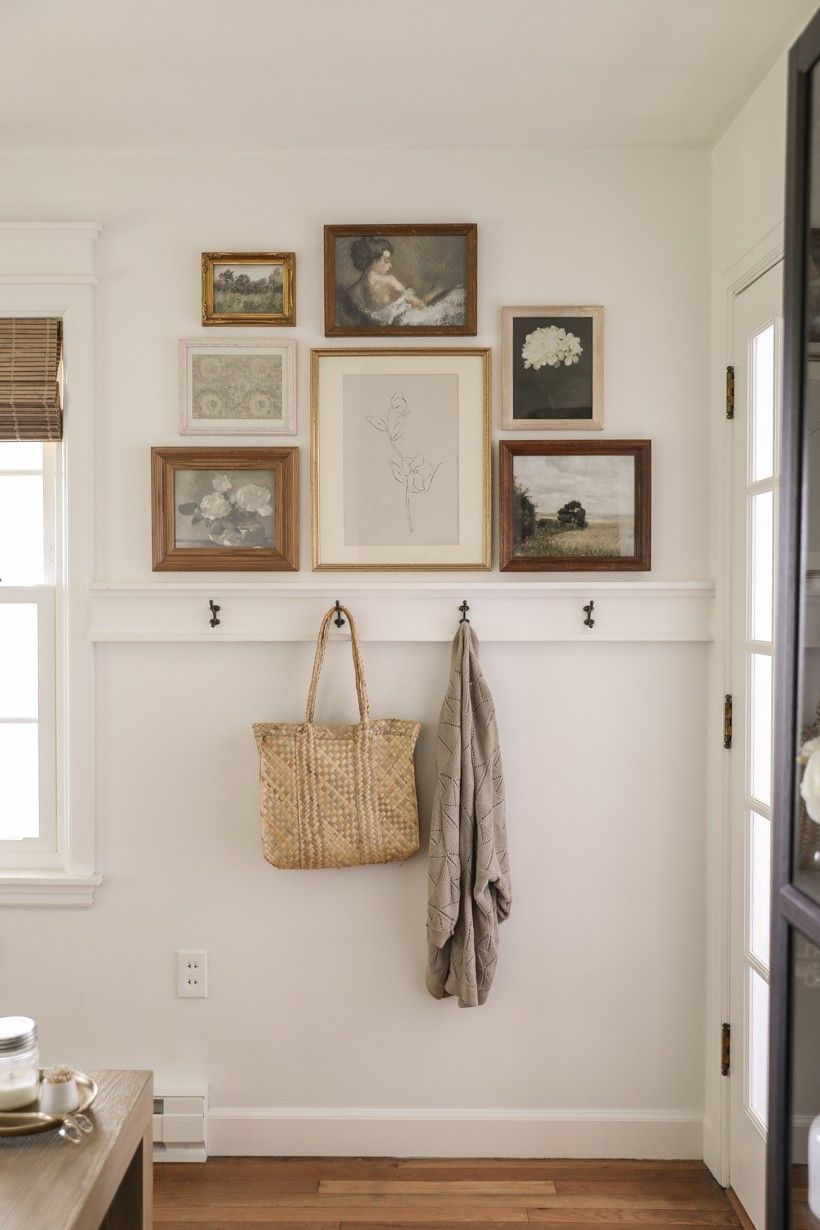
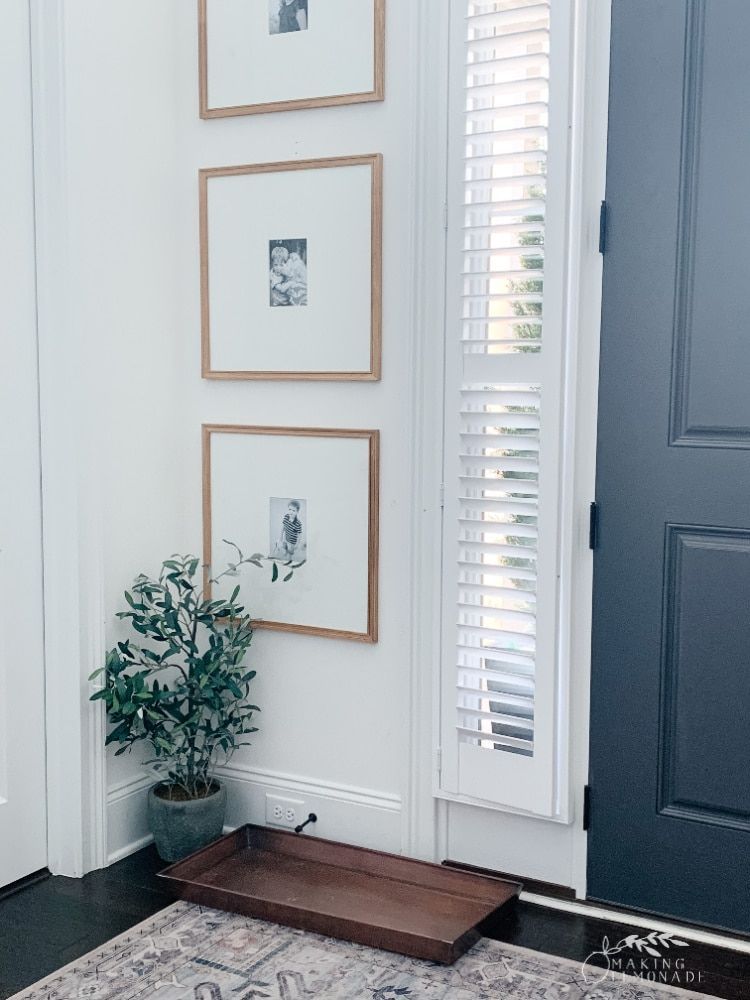
Photo Credit: @lizlovegrowswild
Photo Credit: @makinglemonade
💡 Karen’s Tip:
- Don’t overthink it - start with one photo that brings you joy. A single framed image near the door can say so much. Add to it over time as your story grows.
Product Picks:
- Canvas prints work beautifully in entryways, adding softness and subtle texture
- Matted framed prints elevate the space while keeping it clean and timeless
- Acrylics offer a polished, modern touch - great for minimal or high-traffic entryways
- For shelf styling: lean a couple of smaller framed prints for a relaxed, curated look
Size Suggestions
- 1–3 large pieces: 20x30, 24x36 (great for a bold, minimal look)
- Medium groupings: 11x14, 16x20
- Smaller accents: 8x10, 5x7 (especially effective layered on a shelf or entry console)
Pro Tips:
- Choose images that feel warm and inviting—smiles, connection, or quiet candid moments
- If placing above a bench or console, aim for the gallery to span 60–75% of the furniture’s width
- Keep the gallery center at eye level (about 57–60" from the floor) for the most natural feel
- Consider layering frames with greenery or mirrors to soften the space and add dimension
Want Help Planning Your Gallery Wall?
You already have the memories. Let’s put them on the wall!
I offer complimentary gallery wall mock-ups to all my clients. Whether you’re drawn to a classic framed set or a mix of canvas and acrylics, I’ll show you exactly how your wall could look.
To make it even easier, download my free Gallery Wall Planning Worksheet. It’ll help you measure, plan, and choose confidently.
Download my free Gallery Wall Planning Worksheet to design a stunning display of your family photos!
