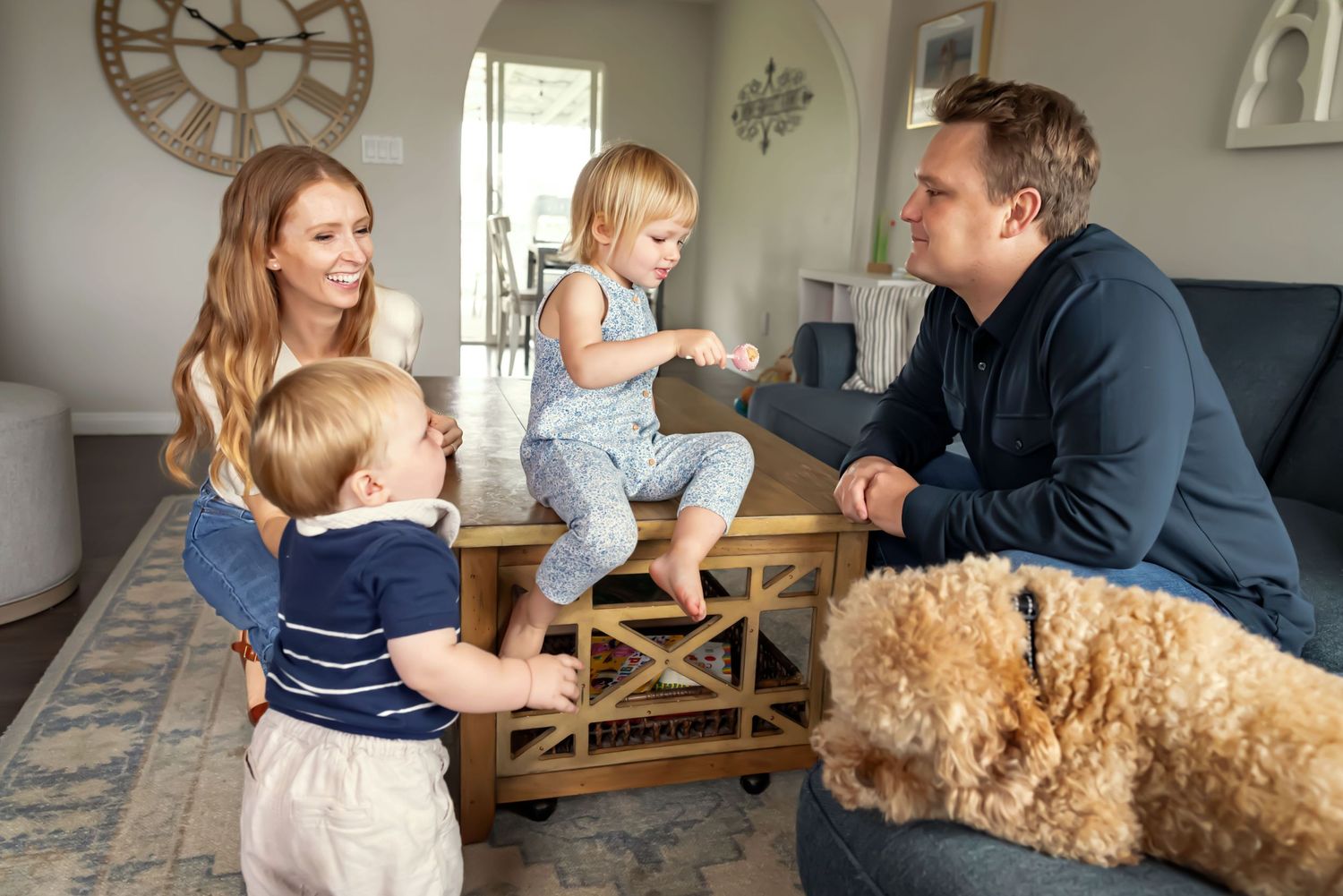
You don’t need a magazine-perfect home for beautiful photos. This post shares how to work with light, framing, and your family’s natural moments to create images you’ll treasure—no matter the backdrop.
I’ve written before about how Your Home is the Perfect Backdrop for Your Family Photos yet you may still worry that your home isn’t ‘photo-ready’ for a family session. The truth is, a single well-lit window and a few simple strategies is often all that’s needed to take beautiful family images in any home.
What strategies, you ask? I’ll cover three: Close-Ups, Shallow Depth of Field, and Family Interactions.
Close-Ups
Close-ups allow you to capture intimate moments without worrying about what’s in the background.
There are several types of close-up shots used in in-home family photography:
- Medium Close-up: captures the subject from the waist up
- A medium close-up could capture a mother holding her child from the waist up, showing the embrace clearly while including enough background to suggest the home environment without focusing on it.
- Close-Up: captures the subject from the shoulders up
- A close-up might focus on the father’s face as he smiles at his child, capturing his expression from the shoulders up. This type of shot highlights the emotional connection, making the moment feel intimate and significant
- Extreme Close-up: usually shows only the subject's eyes or another part of the face
- An extreme close-up could zoom in on a baby’s tiny hand gripping their parent’s finger or a close shot of a newborn’s long eyelashes. This shot emphasizes details that convey tenderness and create a powerful emotional impact.
Close-ups capture emotion without needing a picture-perfect room. When your child’s beautiful smile fills the frame no one will notice the room’s imperfections. If you're worried about clutter or small spaces, close-ups are your best friend! By filling the frame with your subject, whether it's your child’s laughter or a tender family hug, you can eliminate background distractions entirely.
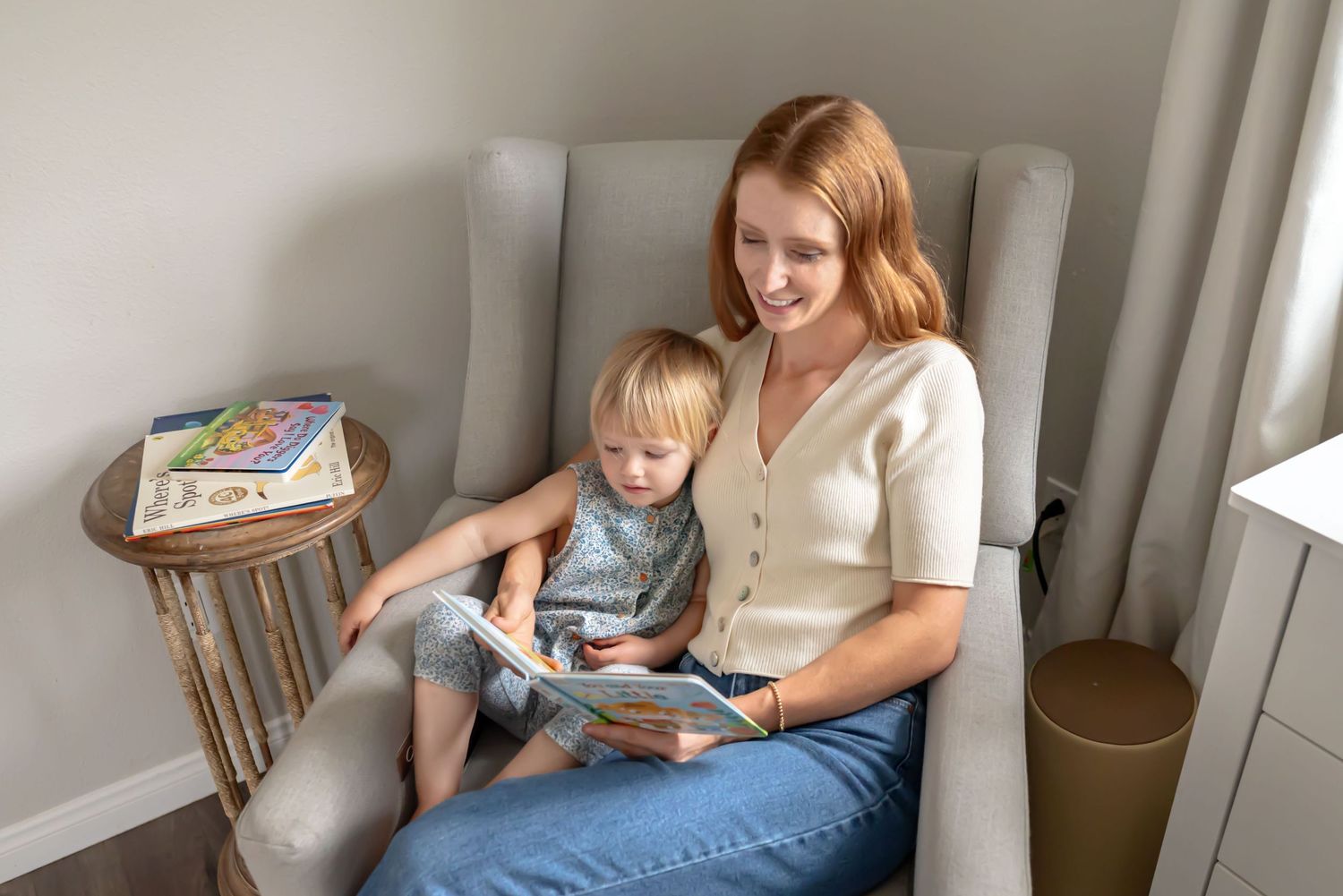
Medium Close-up of a mother reading to her child.

Close-up of a father holding his son.
Shallow Depth of Field
Aperture controls the amount of light entering the camera similar to how our pupils control the amount of light entering our eyes. Selecting a large aperture allows more light to enter the camera and creates a shallow depth of field, leaving the background beautifully blurred.
How does this translate to your in-home family session? In a cluttered living room, focusing on your child’s face with a shallow depth of field will blur out the toys and furniture in the background, making your child’s expression the focal point of the image. Because our eyes naturally go to the part of the image that is most in focus, this technique transforms a busy or less-than-perfect environment into a soft, intimate portrait, ensuring that the love and connection between family members take center stage.
A shallow depth of field transforms any room into a soft dreamy blur. By focusing on your toddler’s playful expression while the background blurs into soft hues, you create a timeless image regardless of the space.

f/1.8 This large aperture creates a dreamy blurred background which causes all of our attention to land on Jazz Ant playing the trumpet.

f/5.0 The background is still slightly blurred; most of our attention still lands on Jazz Ant, but there is more awareness of the background details.
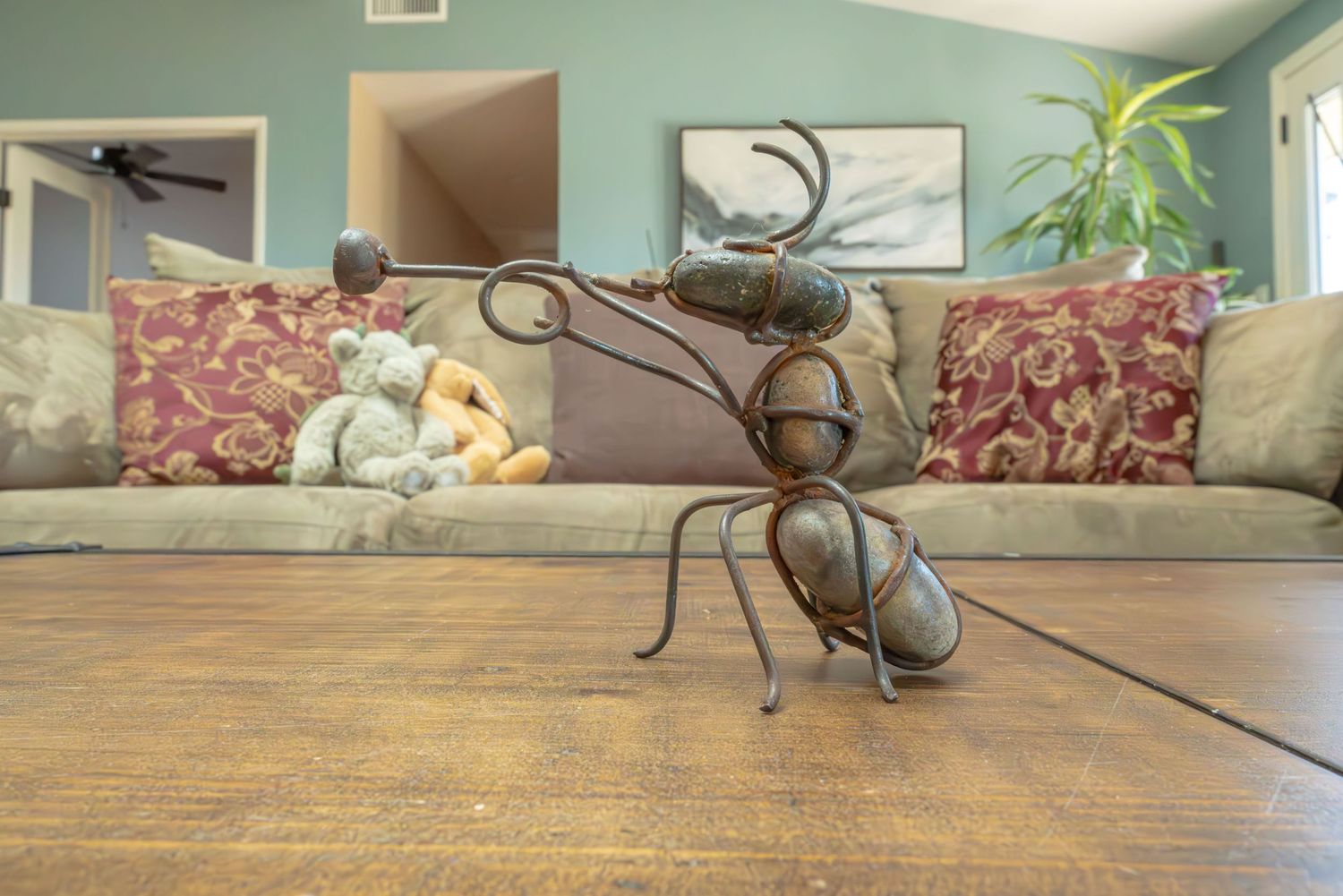
f/16 This small aperture keeps the background fairly focused; our initial attention still lands on Jazz Ant but the other details in the room also compete for our attention.
Family Interactions
When we’re focused on family interactions, we’re not focused on stuff. Focusing on interactions - like a shared laugh or a cozy story time - shifts attention away from your home’s décor and onto the ones you love.
By focusing on universal and relatable moments, the emotional bond between family members becomes the focal point. It’s this connection that makes the photo special, not the stuff in the background. So a candid shot of siblings laughing together on the couch becomes timeless, regardless of what the room looks like.